You are here
Is the Work Working? How State Investments Accelerated Redmond School District’s Professional Learning Journey
In the Redmond School District, a six-year investment in professional learning—especially in the science of reading—has steadily changed what teaching looks like across classrooms. It has been a long, intentional effort: building shared understanding, coaching teachers, refining practice, aligning systems, and sustaining belief.
Now, as Oregon elevates early literacy as a statewide priority and expands investments, Redmond’s work is accelerating. But the district’s greatest contribution may be this: a clear example of what happens when a system is given time, trust, and sustained support to do the work right.
Six years ago, Stephanie Wilcox, Redmond’s School Improvement Specialist alongside Assistant Superintendent Linda Seeberg reviewed student performance data and asked themselves, “is the work working?” The answer sparked a new urgency in Redmond, taking the time to deliberately adopt new curriculum, invest in meaningful professional development, and reimagine what it would look like when the work works.
This all centered around the science of reading, and in 2023, when Governor Tina Kotek and the Oregon legislature announced early literacy as a top priority, Redmond was able to accelerate its growth with new investments from the state. In the first year of curriculum adoption, stories are flooding in of students not just learning how to read, but comprehending the knowledge too.
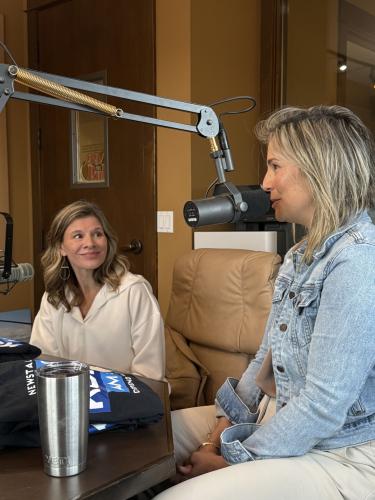
“Science of reading is research that ties into phonics. It’s more encompassing than reading words off paper, it builds rich vocabulary and knowledge about the world around them, so when they're decoding words on paper, they make sense of it,” explained Wilcox in a local radio interview with The Point on KPOV 88.9.
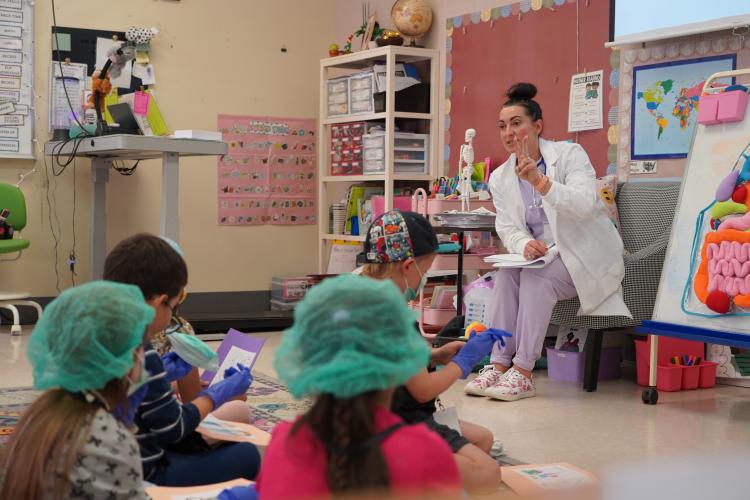
Redmond began an intentional and rigorous two-year adoption process for a new curriculum that would coincide with the district’s efforts to improve student learning outcomes. Daily instructional time in grades K-2 shifted to include one hour of phonics as well as one hour of knowledge building to improve overall literacy skills. Teachers are actively shifting from what they’re familiar with to learning something new and are embracing the change head on.
The collaboration behind this professional development on the science of reading has brought down silos that can inhibit progress. In her recent radio interview with KPOV, Wilcox shares that teachers are being “cheerleaders” for each other, with kindergarten teachers receiving thank you notes for how prepared first graders are when they begin the new year, and teachers at the secondary level accessing elementary lessons to continue the through line across grade levels.
Beyond the classroom, knowledge is pouring out from Redmond’s youngest students and permeating dinner conversations and local communities. The question, “what’d you learn at school today” is no longer met with a blank stare, but with an in-depth and animated lecture about the War of 1812 or about bones and ligaments in the body system. Parents say these student-led conversations are sparking family research through documentaries at home. Others are inspired to take family vacations to further their learning together.
“We’re not just teaching them to read,” Wilcox shared. “ That, of course, is empowering. But that knowledge building is so critical for everyone. All students can join in, everyone has thoughts to go home and share.”
While the success stories are emerging this school year, the work has been well underway for the greater part of the last decade in Redmond. With the recent investment in early literacy, Redmond was able to accelerate progress already in motion– building on a foundation of training, coaching, and systems work that began long before early literacy became a statewide priority. Maintaining this growth and momentum through sustained investments is critical.
“Change of this magnitude takes time and sustained effort,” urged Seeberg. “Providing the accompanying focus, funding and prioritization over time will make a difference.”
Though the work can be difficult and takes time, Superintendent Dr. Charan Cline knows it’s worth it. “There’s a lot of joy in the process. We make sure every kid has a great foundation. We emphasize excellence, hard work, and our folks building relationships. These are important parts for us to move the dial.”
Redmond’s story is a reminder that real improvement is rarely quick and never accidental. It takes sustained investment, consistent priorities, and the trust to let educators stay the course long enough to see change take root. As Oregon continues its focus on early literacy, Redmond offers a clear message to state leaders: when we pair evidence-based instruction with time, support, and coherent systems, public education becomes the equalizer it was always meant to be—and students, families, and entire communities feel the difference.


